

How to Offset Your Carbon Footprint on B4: The Complete Guide to Brazil’s First Climate Action Exchange
In a world where climate urgency is becoming increasingly evident, carbon footprint offsetting has ceased to be an option and has become a strategic necessity.
In Brazil, this reality has taken on a new dimension with the emergence of B4 – the Climate Action Exchange, the country’s first platform dedicated exclusively to the transparent and traceable trading of carbon credits. More than a simple exchange, B4 represents a revolution in the Brazilian sustainability market, offering companies and individuals a secure, audited, and technologically advanced way to neutralize their greenhouse gas emissions.
Since its launch on August 13, 2023, B4 has been transforming Brazil’s carbon offsetting landscape by filling a critical gap that previously existed in the market. Before its creation, carbon footprint offsetting options in the country were limited and often lacked the transparency and traceability required to ensure that each ton of CO₂ offset truly represented a real reduction in emissions.
“There is no carbon credit in Brazil that is traceable, transparent, audited, credible, and that truly represents a real decarbonization project.”
This statement was not merely a slogan, but a commitment to integrity that now defines every process on the platform.
The importance of B4 within Brazil’s sustainability landscape cannot be overstated.
In just two years of operation, the platform has already accumulated more than 300 projects in its listing pipeline, representing 80 million tons of potential sustainable credits. Even more striking is the level of interest shown by Brazilian companies: over 1,800 organizations have approached B4 to carry out carbon footprint inventories, clearly revealing a latent demand for reliable climate offset solutions.
This figure reflects not only the growing level of corporate environmental awareness, but also the trust the market places in B4’s rigorous and transparent methodology.
The First Step: Understanding Your Carbon Footprint with the Climate Agent.
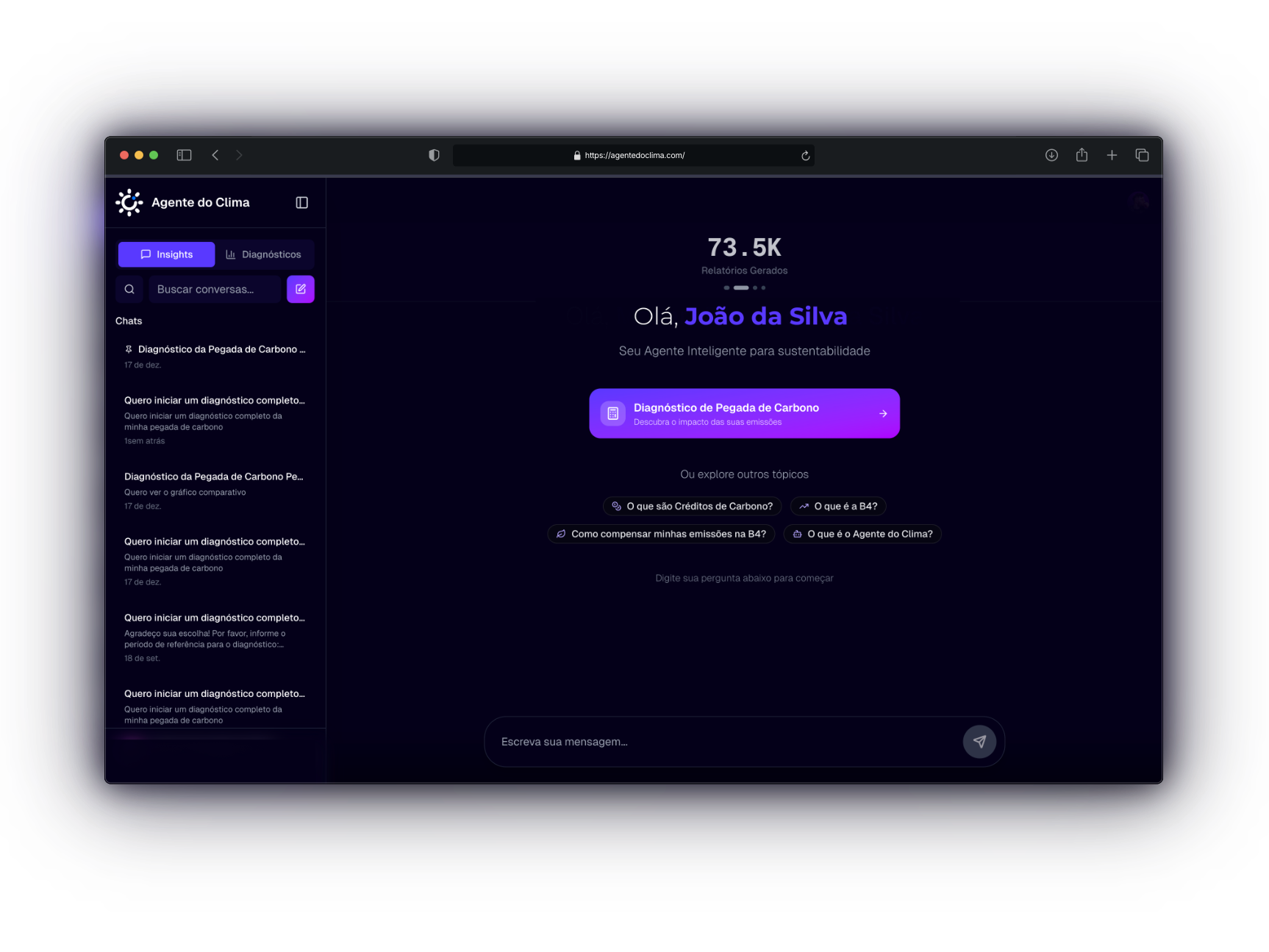
Before offsetting, it is essential to understand. B4 has revolutionized the carbon footprint assessment process with the launch of the Climate Agent (https://agentedoclima.com), an artificial intelligence tool that democratizes access to emissions calculations for both companies and individuals.
This technological innovation represents a milestone in the Brazilian market, making accessible—within up to 24 hours—a process that traditionally took weeks or even months to complete.
The Climate Agent operates as a virtual sustainability consultant, capable of analyzing a wide range of emission sources and generating detailed reports that serve as the foundation for offsetting strategies.
For companies, the tool examines everything from facility energy consumption to indirect emissions across the supply chain, including corporate transportation, business travel, and production processes. For individuals, the system evaluates consumption patterns, personal transportation, dietary habits, and household energy use, offering a comprehensive overview of individual climate impact.
The accuracy of the Climate Agent stems from its ability to process large volumes of data and apply internationally recognized methodologies—such as the GHG Protocol—adapted to the Brazilian context.
The tool not only calculates emissions but also identifies the main sources of carbon generation, enabling users to prioritize reduction actions before moving on to offsetting. This approach aligns perfectly with the climate mitigation hierarchy, which establishes reduction as a priority over compensation.
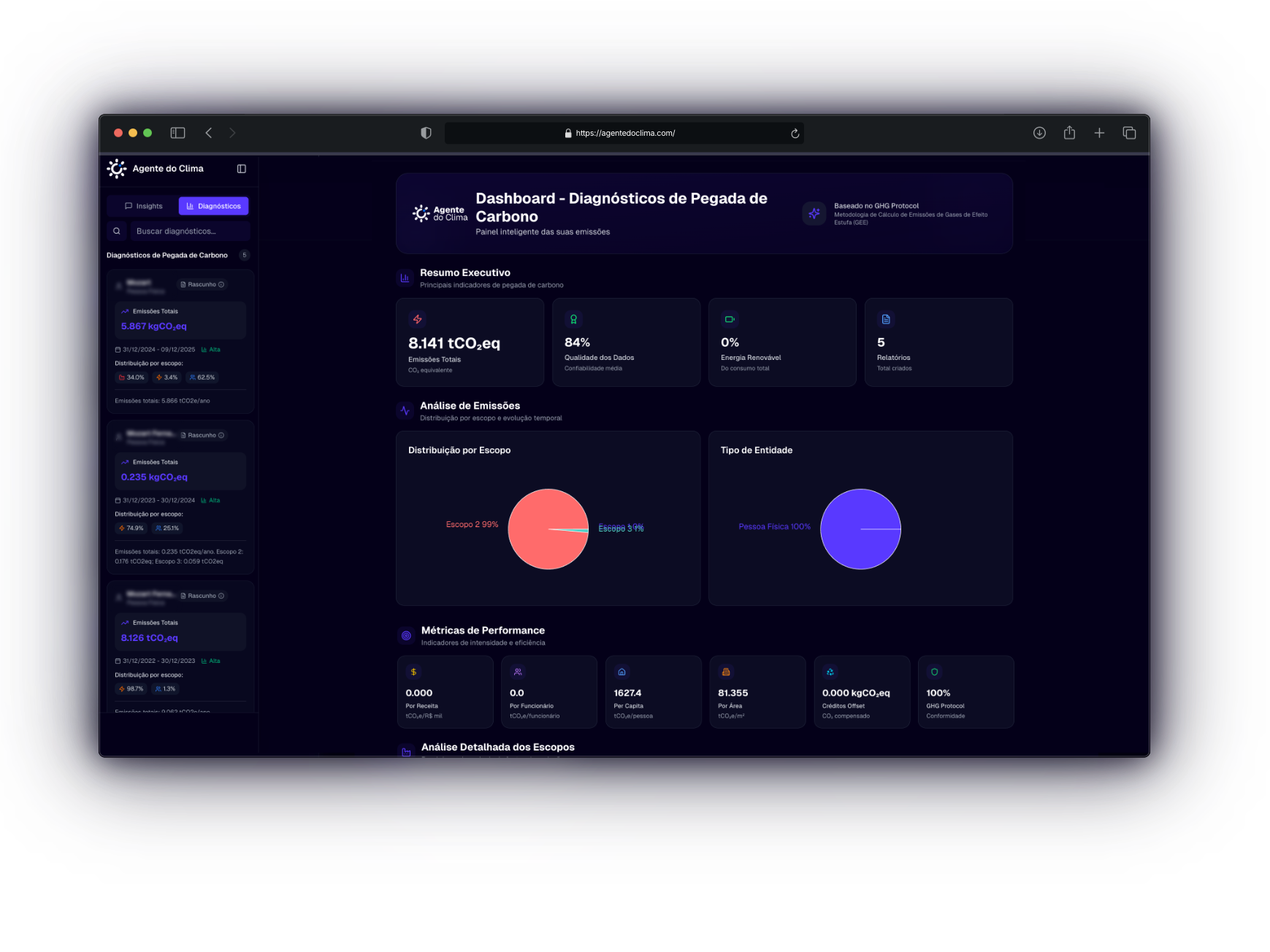
What makes the Climate Agent truly revolutionary is its integration with B4’s broader ecosystem. The data generated by the tool automatically feeds into the platform’s Climate Action Clock, creating a continuous monitoring system that allows sustainability progress to be tracked in real time.
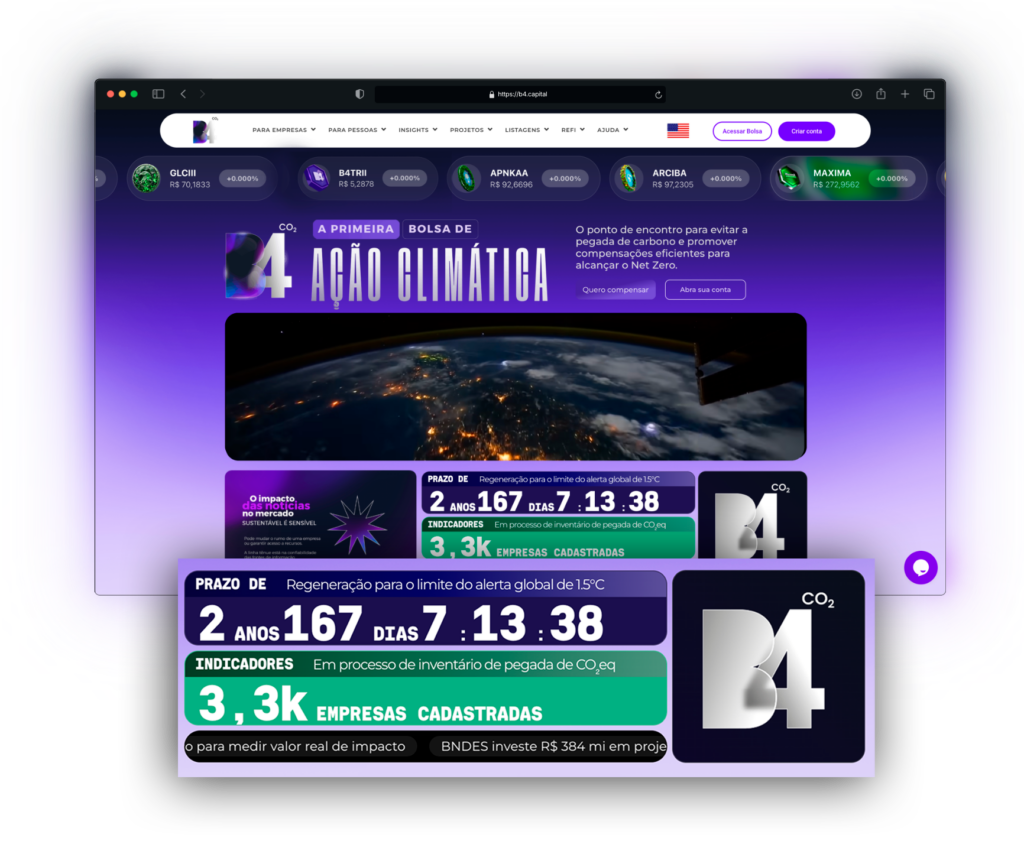
This integration ensures that the offsetting process is based on accurate and up-to-date data, eliminating the uncertainties that often surround carbon footprint calculations.
For companies seeking environmental certifications or required to report their emissions to stakeholders, the Climate Agent provides reports that meet the most rigorous international standards.
The documents generated include the methodologies applied, data sources, emission factors used, and specific recommendations for impact reduction. This level of methodological transparency is essential for companies operating in international markets or accountable to investors who are increasingly demanding with regard to ESG criteria.
The Offsetting Journey: From Assessment to Neutralization
Once the carbon footprint has been established through the Climate Agent, the offsetting journey begins on the B4 platform. This process was designed to be intuitive, transparent, and—above all—effective in delivering real climate impact.
B4 goes beyond acting as a simple intermediary between buyers and sellers of credits; it operates as a rigorous curator, ensuring that only projects with proven environmental impact and measurable social benefits are made available for offsetting.
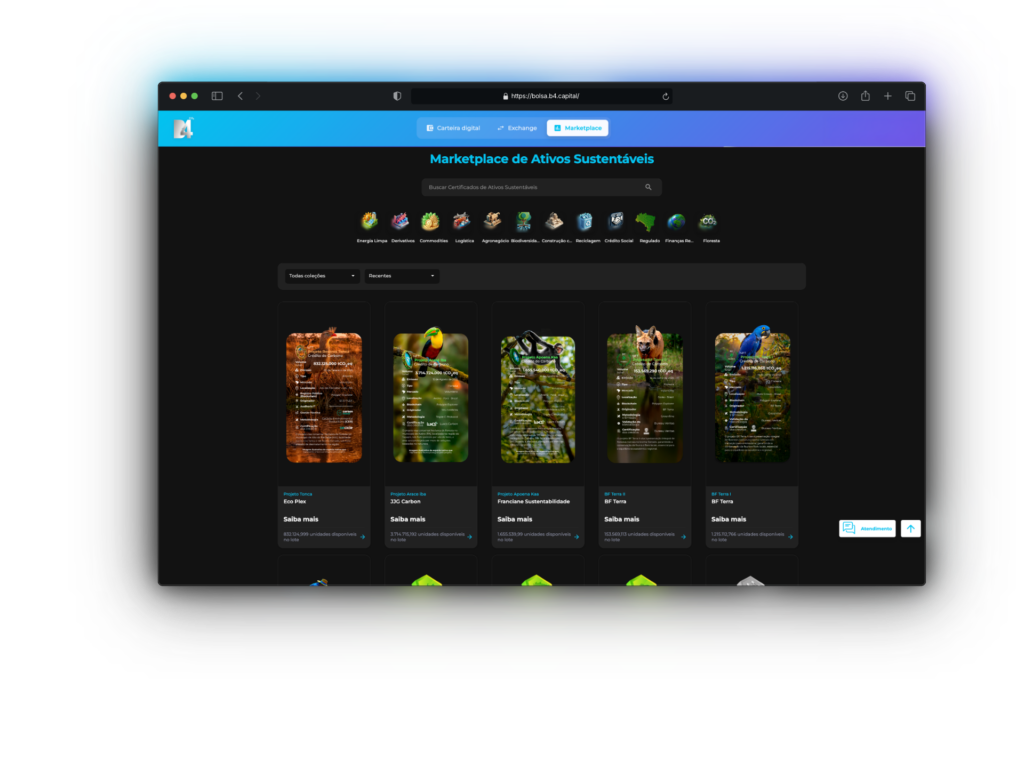
The offsetting process on B4 begins with the selection of carbon credits that best align with the buyer’s values and objectives. The platform offers an impressive diversity of options, including traditional carbon credits, biodiversity credits, clean energy credits, sustainable agribusiness credits, recycling credits, green logistics credits, sustainable construction credits, social credits, and other sustainable assets.

This diversity allows companies and individuals to choose projects that not only neutralize their emissions, but also contribute to specific causes that resonate with their corporate or personal values.
Each credit category available on B4 represents a specific type of sustainability project, carefully selected and audited. Traditional carbon credits, for example, may originate from reforestation projects in the Amazon, forest conservation initiatives monitored via satellite, or carbon capture and storage projects.
Clean energy credits are derived from solar, wind, or other renewable energy projects that replace fossil fuels within the energy matrix. Biodiversity credits, in turn, support projects that not only sequester carbon but also protect critical ecosystems and endangered species.
Transparency is a fundamental pillar of B4’s offsetting process.
Each credit available on the platform is accompanied by detailed information about the project from which it originated, including geographic location, emissions reduction calculation methodology, implementation timeline, additional socio-environmental benefits, and the monitoring system used.
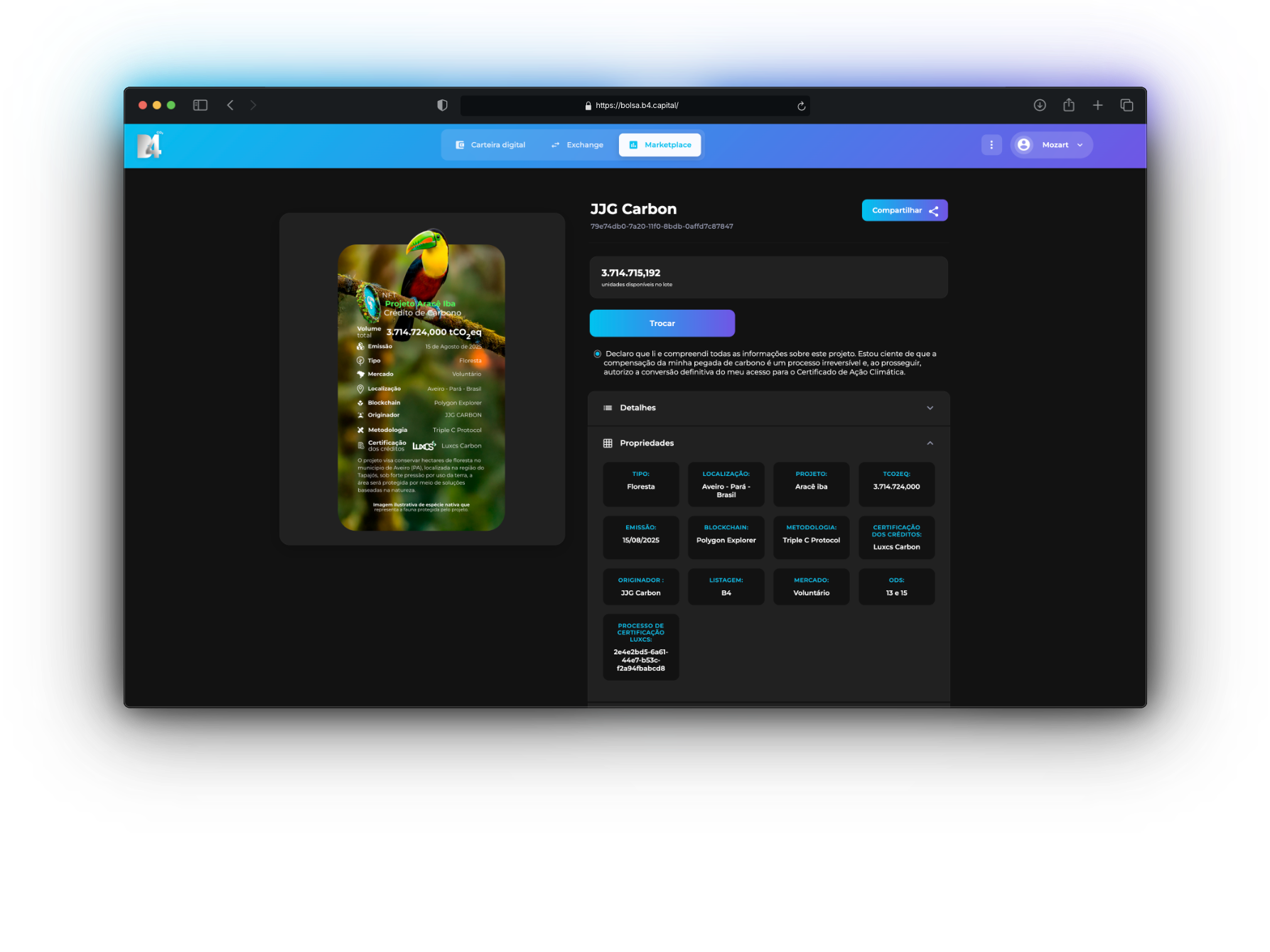
This level of transparency enables buyers to make informed decisions, selecting projects that align not only with their offsetting needs, but also with their values and sustainability strategies.
B4’s technological differentiation is fully realized at the moment of transaction.
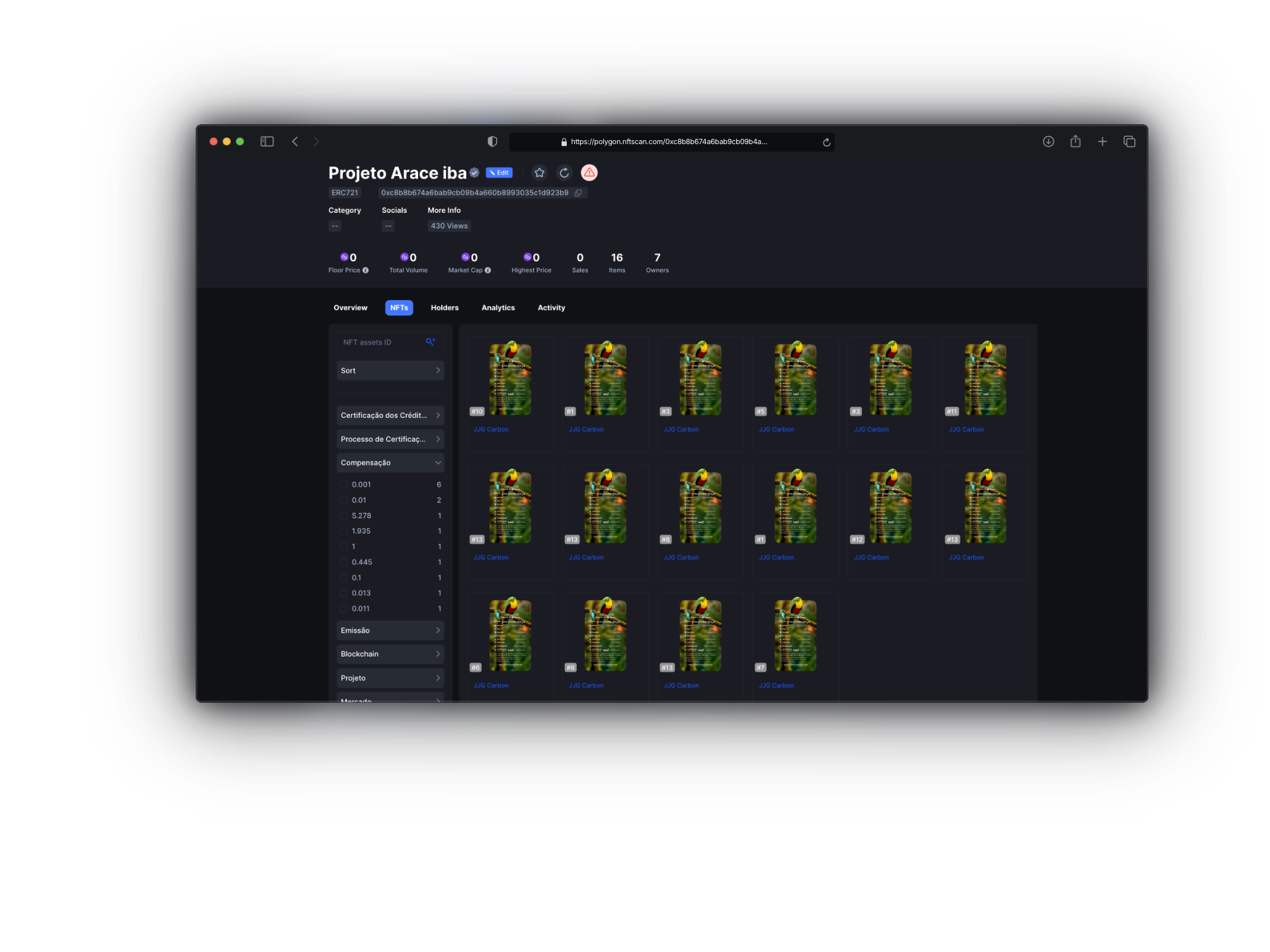
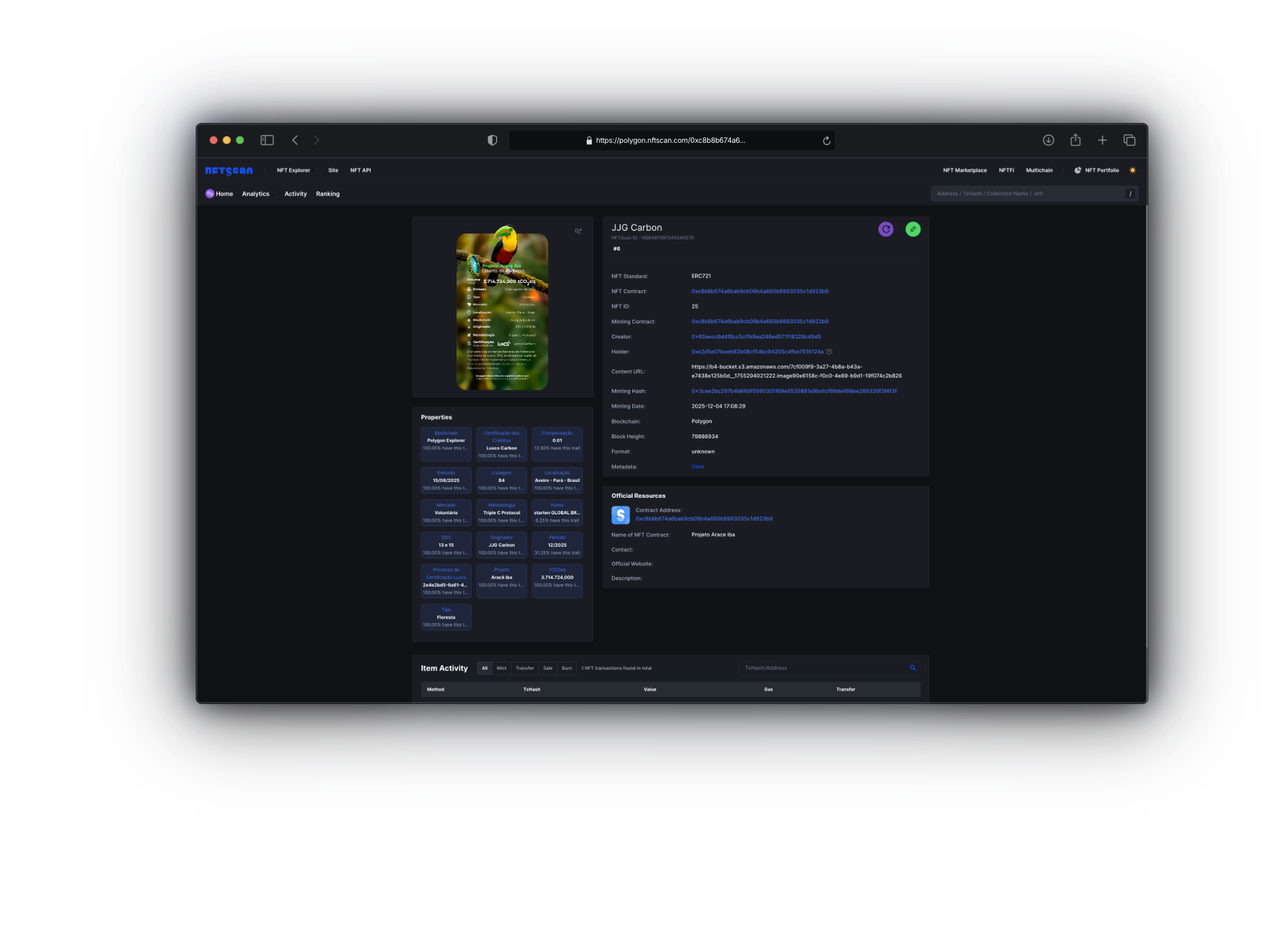
Each carbon credit traded on the platform is recorded on the blockchain, creating an immutable and traceable record that eliminates any possibility of double counting or fraud.
This technology ensures that each ton of CO₂ offset is unique, verifiable, and permanently associated with the buyer, creating an offsetting history that can be audited at any time.
Rigorous Curation: Ensuring Quality and Real Impact
One of the aspects that most clearly distinguishes B4 in the Brazilian carbon market is its rigorous project curation process. With an approval rate of less than 1%—out of 533 projects submitted, only 7 passed the initial evaluations—the platform demonstrates an unwavering commitment to the quality and integrity of the credits it offers. Even after listing, projects are subject to continuous audits.
This level of rigor is not accidental; it reflects a deep understanding that the credibility of the carbon market as a whole depends on the quality of the projects that comprise it.
B4’s curation process involves multiple layers of analysis, beginning with the verification of the methodology used to calculate emission reductions.
Each project must demonstrate additionality—proving that the emission reductions would not occur naturally without the project—and permanence, ensuring that climate benefits are long-lasting.
In addition, projects must present robust monitoring, reporting, and verification (MRV) systems, enabling continuous performance tracking.
The technical assessment is complemented by an evaluation of each project’s additional socio-environmental benefits. B4 prioritizes initiatives that generate measurable co-benefits, such as local job creation, biodiversity protection, improvements in air and water quality, or the strengthening of traditional communities.
This holistic approach ensures that carbon offsetting through B4 contributes to truly sustainable development, aligned with the United Nations Sustainable Development Goals (SDGs).
B4’s Special Projects Department plays a central role in this curation process. With more than 533 projects supported across the country, this department not only evaluates submitted projects but also provides mentorship and technical support to project developers, helping them meet the platform’s stringent standards.
This proactive approach strengthens Brazil’s climate project ecosystem, raising the overall quality of sustainability initiatives nationwide.
B4’s rigorous curation also extends to the continuous verification of listed projects. Through technologies such as satellite monitoring and Internet of Things (IoT) systems, the platform tracks project performance in real time, ensuring that promised climate benefits continue to be delivered. This ongoing oversight is essential to maintaining buyer trust and preserving market integrity.
Project Diversity: Finding the Ideal Offset
B4 stands out in the Brazilian market by offering an unprecedented diversity of offsetting projects, allowing companies and individuals to find options that align perfectly with their values, sectors of activity, and sustainability goals.
This variety is not merely a matter of convenience; it reflects the understanding that different project types generate different forms of impact, and that diversification is essential for a robust climate offset portfolio.
Forest conservation projects represent one of the most traditional and impactful categories available on B4. Many of these projects are located in the Amazon and other critical Brazilian biomes. They not only sequester carbon by protecting existing forests, but also preserve biodiversity, safeguard water resources, and support traditional communities that depend on forests for their livelihoods.
Monitoring of these projects relies on cutting-edge technology, including high-resolution satellite imagery and early-warning deforestation alert systems, ensuring that the promised protection is effectively delivered.
Renewable energy projects constitute another cornerstone of B4’s portfolio.
These projects generate credits by replacing fossil fuel-based energy sources with clean alternatives such as solar, wind, biomass, or small-scale hydropower.
What makes these projects particularly attractive is their ability to deliver measurable and permanent climate benefits, while also contributing to the diversification of Brazil’s energy matrix. For companies in the energy sector—or those with high energy consumption—offsetting through these projects creates a natural synergy between compensation activities and business objectives.
A distinctive innovation of B4 is the inclusion of sustainable agribusiness projects, recognizing the crucial role this sector plays in both emissions and climate solutions in Brazil.
These projects may include regenerative agriculture initiatives, agroforestry systems, sustainable pasture management, or technologies that reduce methane emissions in livestock production.
For agribusiness companies, offsetting through these projects not only neutralizes emissions but also demonstrates sectoral leadership in sustainability.
Biodiversity credits represent an emerging frontier in the offsetting market, acknowledging that the climate crisis and the biodiversity crisis are interconnected and must be addressed in an integrated manner. These projects focus on protecting and restoring critical ecosystems, generating benefits for both climate mitigation and species conservation.
For companies with biodiversity commitments or operating in high ecological impact sectors, these credits offer a way to address multiple environmental challenges simultaneously.
The social credits category reflects B4’s commitment to a holistic approach to sustainability, recognizing that effective climate solutions must also address social issues. These projects may include initiatives to expand access to clean energy in rural communities, energy efficiency programs in low-income housing, or sanitation projects that reduce methane emissions.
For companies with strong corporate social responsibility commitments, these credits allow climate objectives to be aligned with positive social impact.
Blockchain Technology: Absolute Transparency and Traceability
B4’s implementation of blockchain technology represents a revolution in transparency and traceability within the Brazilian carbon market. This technology—operating as a distributed and immutable ledger—ensures that every carbon credit traded on the platform is unique, verifiable, and permanently traceable from its origin to its final retirement.
This technological innovation not only eliminates traditional carbon market issues such as double counting and fraud, but also establishes a new transparency standard that is influencing the entire sector.
Each carbon credit listed on B4 receives a unique identifier registered on the blockchain, creating a digital “birth certificate” that contains all relevant information about the originating project.
This record includes data on the methodology used to calculate emission reductions, the credit generation period, independent verifications conducted, and associated socio-environmental co-benefits. Once recorded on the blockchain, this history becomes immutable, creating an unquestionable source of truth regarding the origin and quality of each credit.
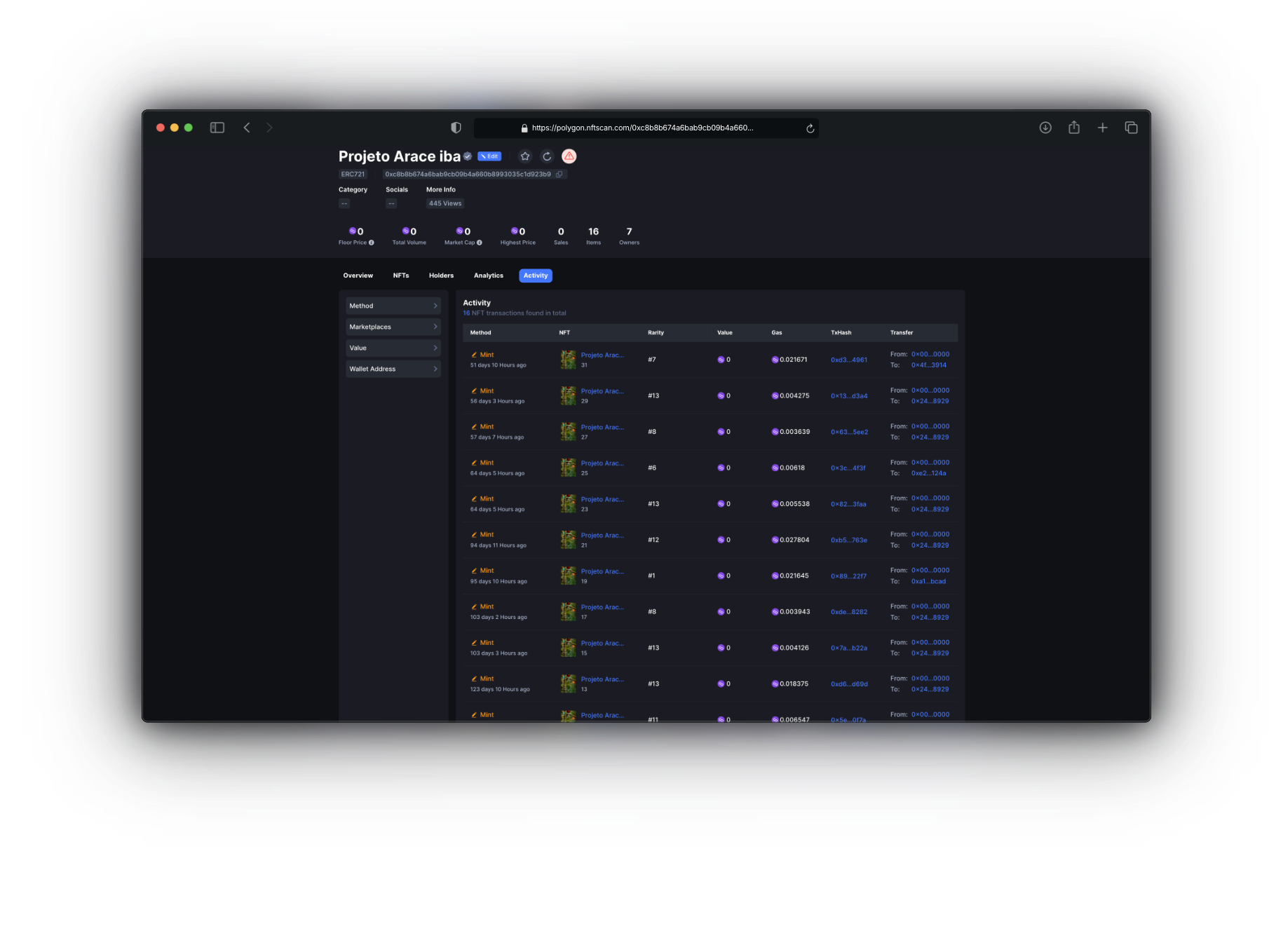
The transaction process on B4’s blockchain is designed for maximum transparency. When a buyer acquires carbon credits, the transaction is publicly recorded on the blockchain, creating a permanent record of the transfer of ownership.
This record includes not only the transaction details, but also information about the purpose of the offset, enabling full traceability of how the credits are used.
When credits are “retired”—that is, used for final offsetting—this event is also recorded on the blockchain, ensuring that they cannot be resold or reused.
The transparency provided by B4’s blockchain extends beyond individual transactions to create a comprehensive overview of the Brazilian carbon market. Aggregated data on traded volumes, the most popular project types, average prices, and market trends are made publicly available, contributing to the overall maturation and efficiency of the market.
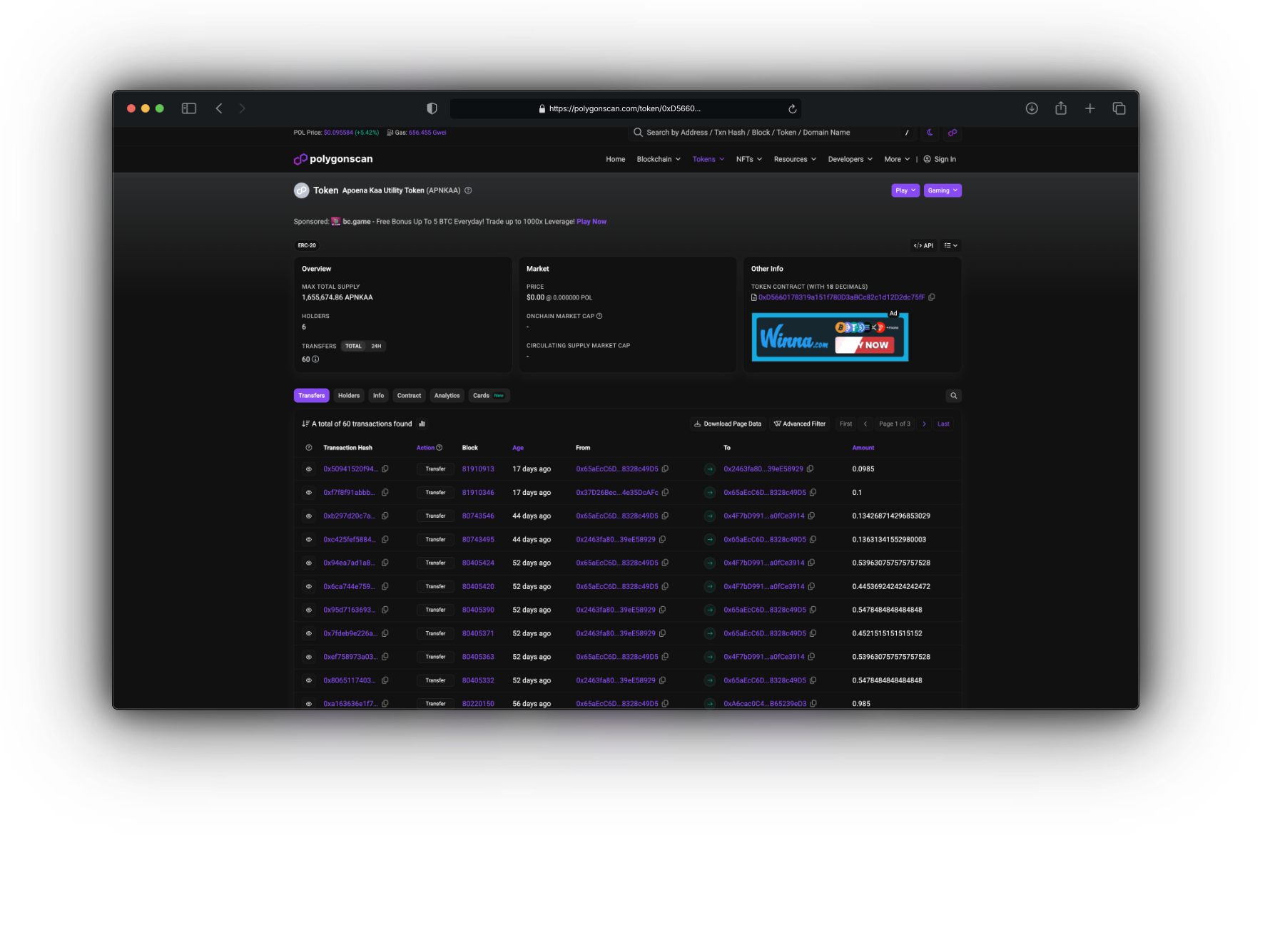
This level of market transparency is essential to attract institutional investors and to position Brazil as a reliable player in the global carbon market.
The implementation of blockchain also facilitates B4’s integration with corporate environmental management systems and sustainability reporting platforms. Companies can integrate their ESG management systems directly with B4’s blockchain, automating the offset reporting process and ensuring that sustainability data is accurate and auditable. This technological integration reduces administrative costs and eliminates manual errors, making carbon offsetting more efficient and reliable.
The Climate Action Clock: Real-Time Monitoring
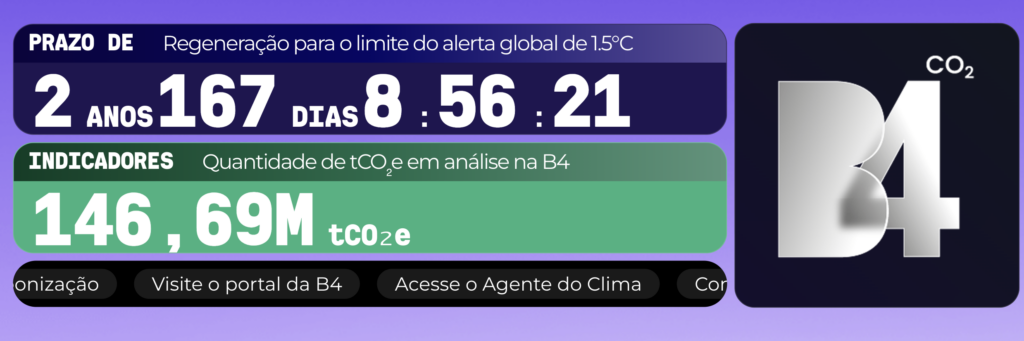
B4’s Climate Action Clock represents a unique innovation in the Brazilian sustainability market, offering real-time monitoring of climate actions carried out through the platform.
This tool goes far beyond a simple dashboard; it constitutes an integrated climate intelligence system that enables the tracking of the aggregated impact of all offsetting actions executed on B4, creating a panoramic view of national climate progress.
Market Transparency and Institutional Confidence
This level of market transparency is essential to attract institutional investors and to establish Brazil as a trustworthy player in the global carbon market.
Blockchain implementation also facilitates B4’s integration with corporate environmental management systems and sustainability reporting platforms. Companies can integrate their ESG management systems directly with B4’s blockchain, automating offset reporting and ensuring that sustainability data remains accurate and auditable. This technological integration reduces administrative costs and eliminates manual errors, making carbon offsetting more efficient and reliable.
The Climate Action Clock: Real-Time Monitoring
B4’s Climate Action Clock represents a unique innovation in the Brazilian sustainability market, offering real-time monitoring of climate actions carried out through the platform.
This tool goes far beyond a simple dashboard; it constitutes an integrated climate intelligence system that enables tracking the aggregated impact of all offsetting actions executed on B4, creating a panoramic view of national climate progress.
The operation of the Climate Action Clock is based on the integration of data from multiple sources: carbon footprint assessments generated by the Climate Agent, carbon credit transactions recorded on the blockchain, performance data from projects listed on the platform, and relevant macroeconomic and environmental indicators.
This integration creates a holistic monitoring system that provides insights into both individual actions and sectoral and national trends.
For companies, the Climate Action Clock functions as a sustainability management command center. The tool allows organizations to track progress toward carbon neutrality targets, benchmark performance against sector peers, identify improvement opportunities, and generate automated reports for stakeholders.
Integration with the Climate Agent enables the system to automatically update carbon footprints as new data becomes available, maintaining an always-current view of the company’s climate status.
The real-time aspect of the Climate Action Clock is particularly valuable for companies with complex or seasonal operations. The tool can detect emission variations caused by operational changes, alert users to deviations from established targets, and suggest corrective actions based on historical data and market trends. This responsiveness is essential in a context where climate management is becoming increasingly dynamic and strategic.
For the market as a whole, B4’s Climate Action Clock is creating an unprecedented database on climate action in Brazil. Aggregated and anonymized data collected by the tool contributes to academic research, public policy formulation, and sectoral decarbonization strategies. This contribution to collective climate knowledge represents a significant public benefit generated by the B4 platform.
Education and Capacity Building: Developing a Mature Market
B4 recognizes that the development of a mature and efficient carbon market in Brazil depends not only on the availability of high-quality credits, but also on education and capacity building for all market participants. For this reason, the platform has invested heavily in educational initiatives ranging from free public events to specialized training programs for industry professionals.
B4’s educational events program has already hosted more than five free, public seminars in São Paulo under the series “Climate Action in Focus.” These events bring together experts in sustainability, financial markets, and blockchain technology to discuss topics ranging from market regulation to traceability tools and regenerative finance (ReFi). The seminars not only educate participants on technical aspects of the carbon market, but also demystify complex concepts, making them accessible to business leaders, investors, and professionals from diverse sectors.
The Traders Academy represents the most advanced training program offered by B4. This specialized immersion is designed for investors, fund managers, sustainability professionals, and other market participants who require deep technical knowledge of carbon credit trading.
The program covers everything from carbon pricing fundamentals to advanced portfolio strategies, as well as regulatory and technological aspects of the B4 platform.
As emphasized by CEO Odair Rodrigues, the goal is to “help people learn about the sustainability market” and enable investors and companies to “step onto familiar ground” when entering this emerging market.
B4’s educational approach recognizes that different audiences have different knowledge needs. For companies new to sustainability, the platform offers introductory webinars on basic concepts such as carbon footprints, the mitigation hierarchy, and types of carbon credits. For more advanced professionals, technical workshops are available on calculation methodologies, MRV systems (Monitoring, Reporting, and Verification), and regulatory trends. This segmentation ensures that each participant receives the most appropriate level of information.
B4’s educational dimension is also expressed through high-quality digital content. The platform’s blog regularly publishes technical articles, market analyses, case studies, and practical guides that have become reference materials in the sector. This content not only educates but also helps establish a shared language and quality standards within the Brazilian carbon market.
Integration with the Regulated Market: Preparing for the Future
One of B4’s most visionary characteristics is its preparation for integration with Brazil’s regulated carbon market, currently being established through the Brazilian Emissions Trading System (SBCE). This preparation goes beyond compliance; it represents a strategic opportunity to position B4 as a bridge between voluntary and regulated markets, creating an integrated climate action ecosystem in Brazil.
The approval of Law No. 15,042/2024, which establishes the SBCE, marks the beginning of a new era for Brazil’s carbon market. This system will create mandatory offsetting obligations for large emitters in specific sectors, generating structural demand for carbon credits that will complement existing voluntary demand.
With its advanced technological infrastructure and rigorous curation processes, B4 is uniquely positioned to serve both companies seeking voluntary offsetting and those required to comply with regulatory obligations.
The experience accumulated by B4 in the voluntary market constitutes a valuable asset for the regulated market. The platform’s quality standards, traceability systems, and verification processes meet or exceed the requirements likely to be established for the regulated market.
This early preparation means that companies already using B4 for voluntary offsetting will be well positioned to meet future regulatory obligations without significant changes to their processes.
Integration between voluntary and regulated markets through B4 will create unique opportunities for Brazilian companies. Organizations that currently engage in voluntary offsetting will be able to use the same platform and processes when they become subject to regulatory obligations.
This continuity will reduce transition costs and allow companies to maintain their sustainability strategies even as the regulatory environment evolves.
B4 is also prepared to facilitate the transition of projects between voluntary and regulated markets. Projects that currently generate voluntary credits may, when appropriate, generate credits that meet regulated market requirements.
This flexibility is essential to maximizing Brazil’s credit generation capacity and ensuring that investments in climate projects are used as efficiently as possible.
Success Stories: Companies Leading the Way in Offsetting
B4’s trajectory is marked by success stories that demonstrate how companies of different sizes and sectors can use the platform to achieve their sustainability objectives. These cases not only illustrate the platform’s versatility, but also serve as inspiration and guidance for other organizations seeking to initiate or enhance their carbon offset strategies.
One of the most emblematic cases is the AgroCarbon CRVE Project, developed by the company Máxima, representing one of the first regulated-market credits listed on B4. This project focuses on forest conservation across more than six Brazilian states and demonstrates how local initiatives can generate significant climate impact while creating economic and social benefits for rural communities.
The project uses regenerative agriculture and reforestation techniques to sequester carbon while improving soil quality and increasing local biodiversity.
The success of the AgroCarbon CRVE Project illustrates several key aspects of B4’s approach. First, it shows how the platform can accommodate projects of different scales, from large corporate initiatives to smaller community-based projects. Second, it highlights the importance of socio-environmental co-benefits in project selection. Third, it exemplifies how B4 can serve as a bridge between voluntary and regulated markets.
Financial sector companies have found B4 to be a valuable tool for meeting growing investor and regulatory demands for climate transparency. Banks and asset managers are using the platform not only to offset their own operational emissions, but also to offer green financial products to clients.
The traceability provided by B4’s blockchain is particularly valuable for these institutions, which must demonstrate to stakeholders that sustainability investments generate real and measurable impact.
The technology sector has been another early adopter of B4, with companies using the platform to offset emissions related to data center energy consumption and digital operations.
For these companies, offsetting through renewable energy projects creates a natural synergy between compensation activities and corporate values. Additionally, B4’s technological nature resonates strongly with their organizational culture, facilitating adoption and integration with existing systems.
Agribusiness companies have found in B4 an opportunity to demonstrate sector leadership in sustainability. By offsetting emissions through regenerative agriculture or forest conservation projects, these companies not only neutralize their climate impact but also support the sector-wide transition toward more sustainable practices.
This approach is particularly valuable in a context where Brazilian agribusiness faces increasing international pressure for improved environmental performance.
The Future of Carbon Offsetting at B4
Looking ahead, B4 is positioned to lead an even deeper transformation of Brazil’s carbon offset market. With projections to list more than 300 million tons of carbon credits by 2030, the platform is preparing to scale its operations significantly while maintaining the high quality standards that distinguish it.
One of the most promising frontiers for B4 is the expansion into new types of environmental credits.
Beyond traditional carbon credits, the platform is exploring opportunities in water credits, soil credits, and other environmental assets that can be transformed into utility tokens as access services and traded transparently. This diversification reflects the understanding that environmental challenges are interconnected and require integrated solutions.
Technological evolution will also bring new capabilities to the B4 platform.
The development of more advanced artificial intelligence systems will enable sophisticated predictive analyses, helping companies anticipate offsetting needs and optimize sustainability strategies. Integration with Internet of Things (IoT) technologies will allow even more precise monitoring of listed projects, ensuring that promised climate benefits are effectively delivered.
International expansion represents another significant opportunity for B4. With the global carbon market projected to reach USD 50 billion by 2030, there is a clear opportunity for the platform to expand across Latin America, bringing its expertise in transparency and traceability to markets facing challenges similar to those B4 addressed in Brazil.
Education will remain a central pillar of B4’s strategy. The platform plans to expand its educational programs by developing online courses, professional certifications, and partnerships with universities to train the next generation of carbon market professionals.
This investment in human capital is essential to ensuring that market growth is accompanied by the development of the skills required to operate it efficiently and with integrity.
Conclusion: B4 as a Catalyst for Climate Action in Brazil
B4 – the Climate Action Exchange represents far more than a carbon credit trading platform; it stands as a fundamental catalyst for transforming Brazil’s climate action landscape. In just two and a half years of operation, the platform has not only filled a critical market gap, but has also established new standards of transparency, quality, and innovation that are influencing the entire sector.
The carbon offsetting journey through B4 offers Brazilian companies and individuals a unique opportunity to contribute to solving the climate crisis in a transparent, effective manner aligned with the highest international standards.
From initial assessment via the Climate Agent to continuous monitoring through the Climate Action Clock, every stage of the process is designed to maximize real climate impact while delivering the transparency and traceability the market demands.
B4’s rigorous project curation—with an approval rate below 1%—ensures that every dollar invested in offsetting generates real and measurable climate benefits. This approach not only protects buyers’ interests but also strengthens the credibility and maturity of Brazil’s carbon market as a whole.
The diversity of projects available on the platform allows organizations of all types to find offsetting options aligned with their values and strategic objectives. Whether through forest conservation in the Amazon, renewable energy initiatives, or regenerative agriculture projects, B4 offers multiple pathways to carbon neutrality.
B4’s technological innovation—particularly its use of blockchain for traceability and artificial intelligence for diagnostics and monitoring—positions the platform at the global forefront of the carbon market. These innovations not only solve longstanding sector challenges but also create new possibilities for corporate climate management.
B4’s commitment to education and capacity building is laying the foundation for a mature and sophisticated Brazilian carbon market. Through its educational programs, the platform is training a new generation of professionals equipped to navigate the complexities of carbon markets and develop increasingly effective sustainability strategies.
B4’s preparation for integration with Brazil’s regulated market demonstrates a long-term strategic vision that positions the platform to lead the next phase of national market development. This readiness ensures that companies currently using B4 for voluntary offsetting will be well prepared to meet future regulatory obligations.
For companies and individuals seeking to offset their carbon footprint responsibly and effectively, B4 offers not just a transaction platform, but a complete climate solutions ecosystem.
From diagnostics and high-quality project selection to full transparency and continuous monitoring, B4 transforms carbon offsetting from an obligation into an opportunity for sustainability leadership.
The trajectory of B4 over the past two years demonstrates that it is possible to build a carbon market that is simultaneously rigorous in standards, innovative in solutions, and accessible in operation. By choosing to offset through B4, companies and individuals not only neutralize emissions, but also contribute to building a more sustainable future for Brazil and the world.
The future of climate action in Brazil is being written today—and B4 stands at the forefront of this transformation.
Complete Guide: How to Register on B4 and Access Carbon Credits
Direct and Practical Step-by-Step
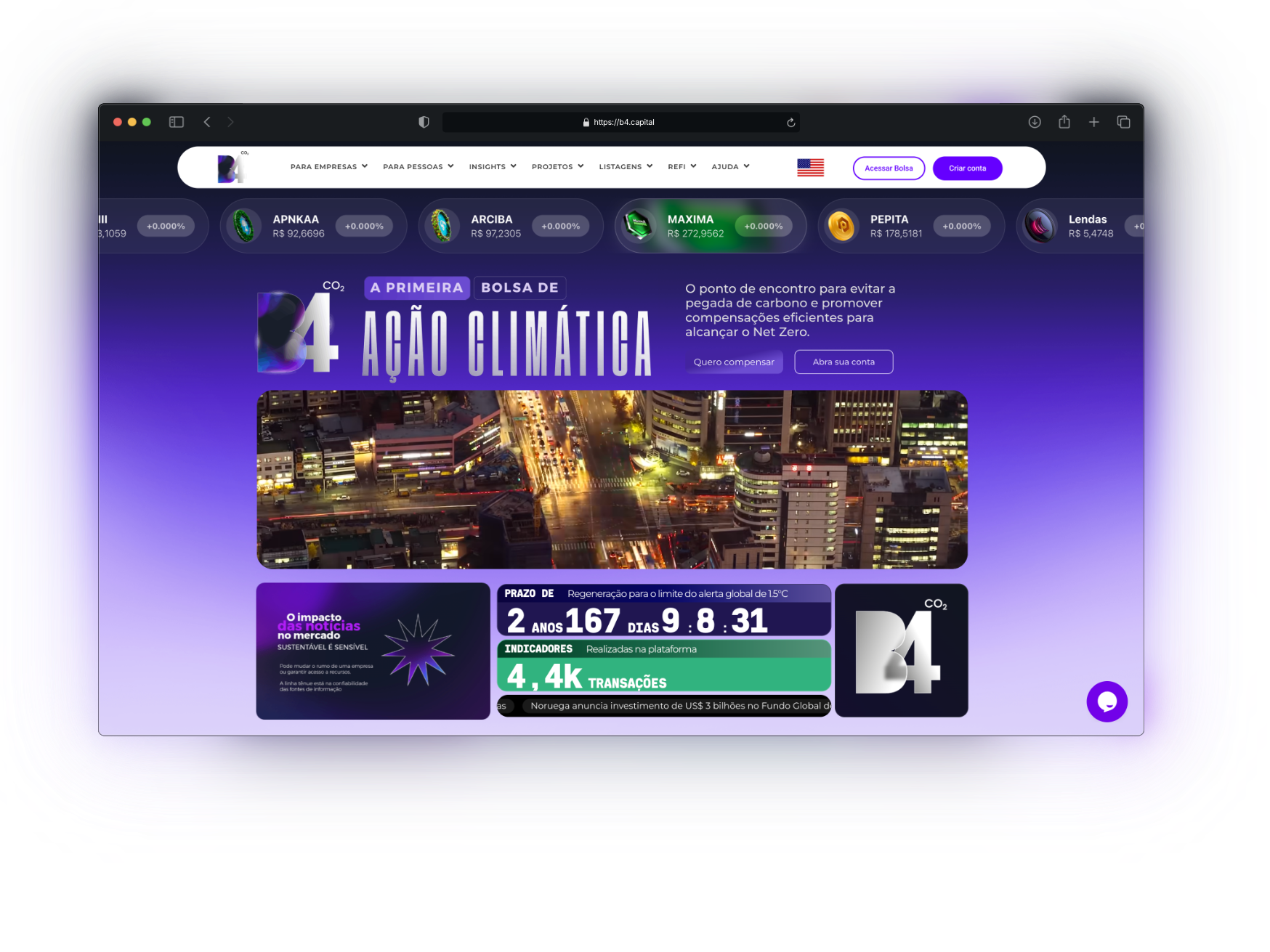
🚀 STEP 1: Access the B4 Website
- Open your browser and go to: b4.capital
- Click “Create account” (purple button in the top-right corner)
- Alternatively, click “Open your account” (yellow button on the homepage)
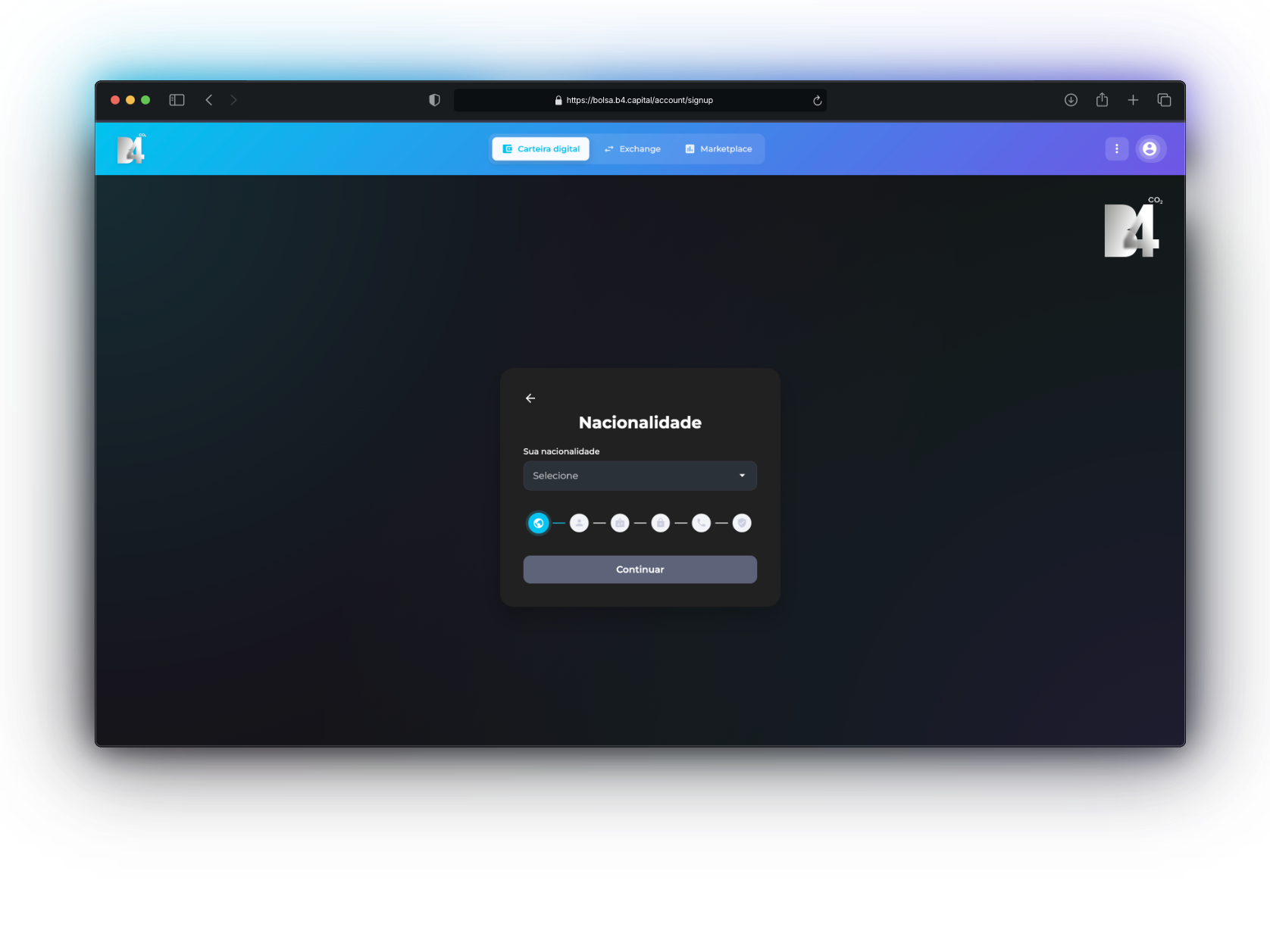
🌍 STEP 2: Set Language and Nationality
- Select the language: Click on the Brazil flag 🇧🇷 to choose Portuguese
- Click “Continue”
- Enter your nationality: Type “Brazil” in the field
- Click “Continue”
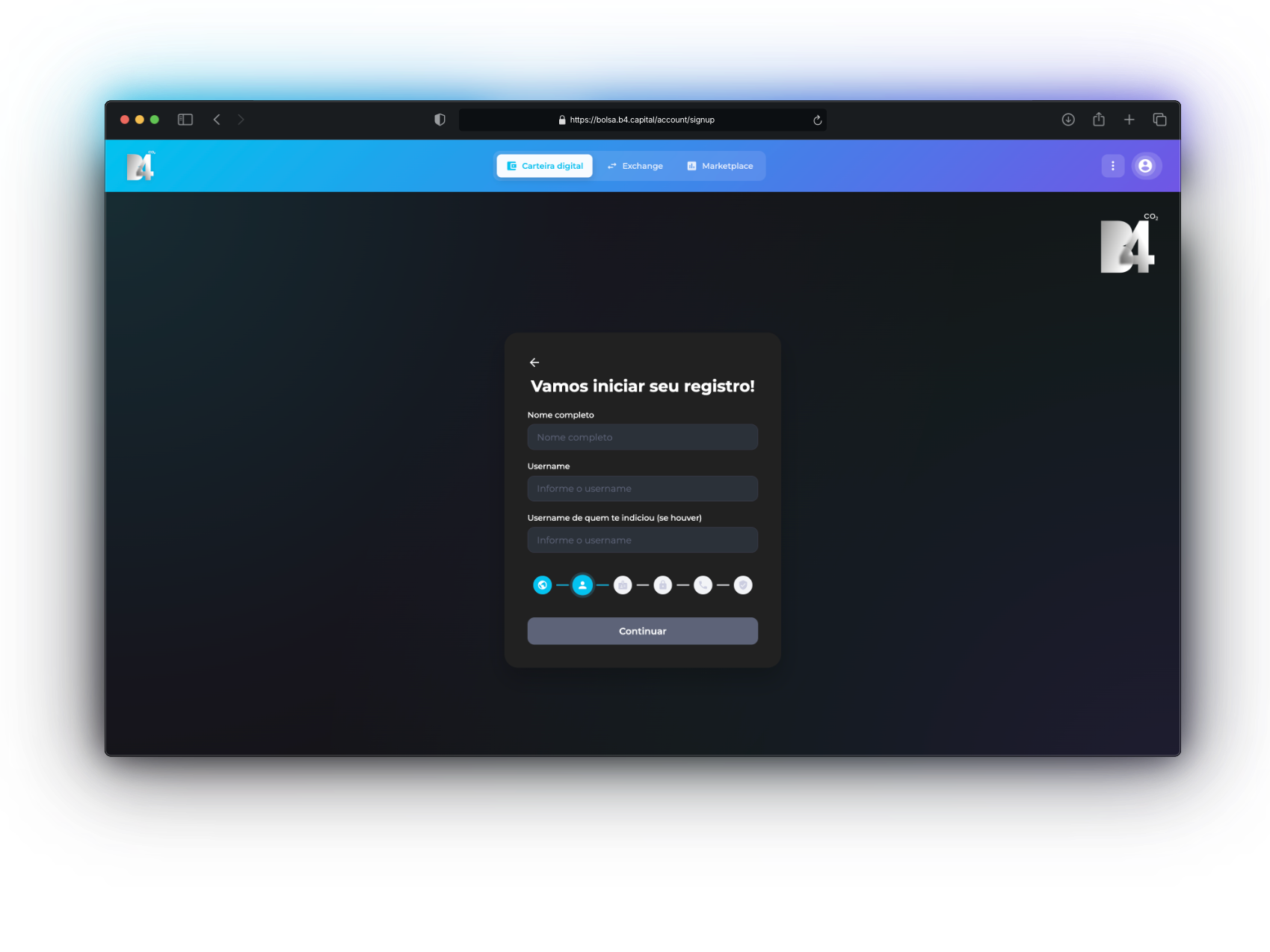
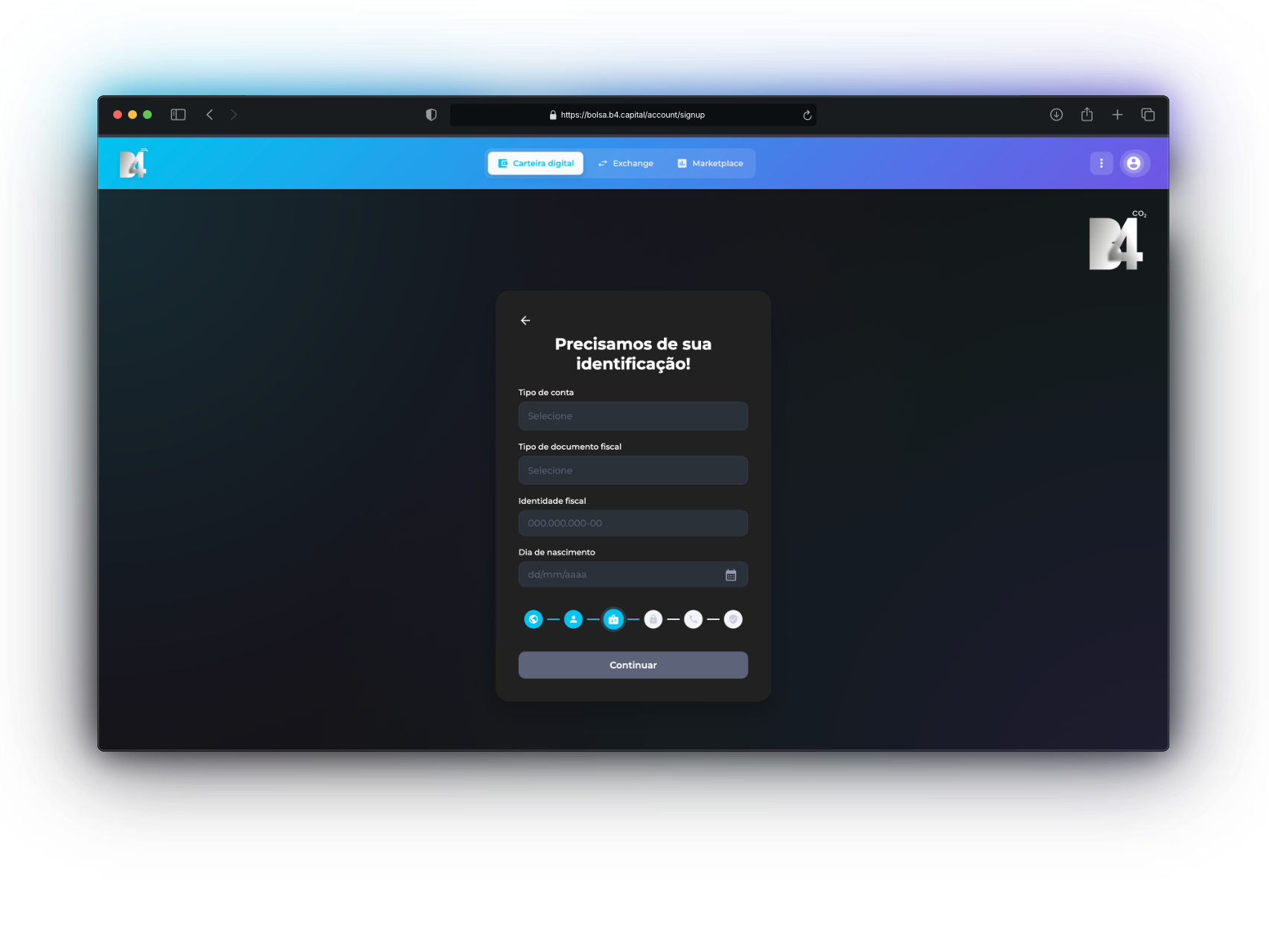
📝 STEP 3: Fill in Personal Information
- Full name: Exactly as shown on your official document
- Email: Use a valid email address (you will receive confirmations)
- Phone number: Include country and area code (format: +55 11 99999-9999)
- CPF or CNPJ: Depending on whether you are an individual or a legal entity
- Date of birth: For individuals
- Full address: ZIP code, street, number, city, state
🔐 STEP 4: Create Password and Verification
- Create a strong password: Minimum of 8 characters, including letters, numbers, and symbols
- Confirm the password: Enter it again
- Accept the terms: Read and check the agreement boxes
- Email verification: Open your email and click the confirmation link
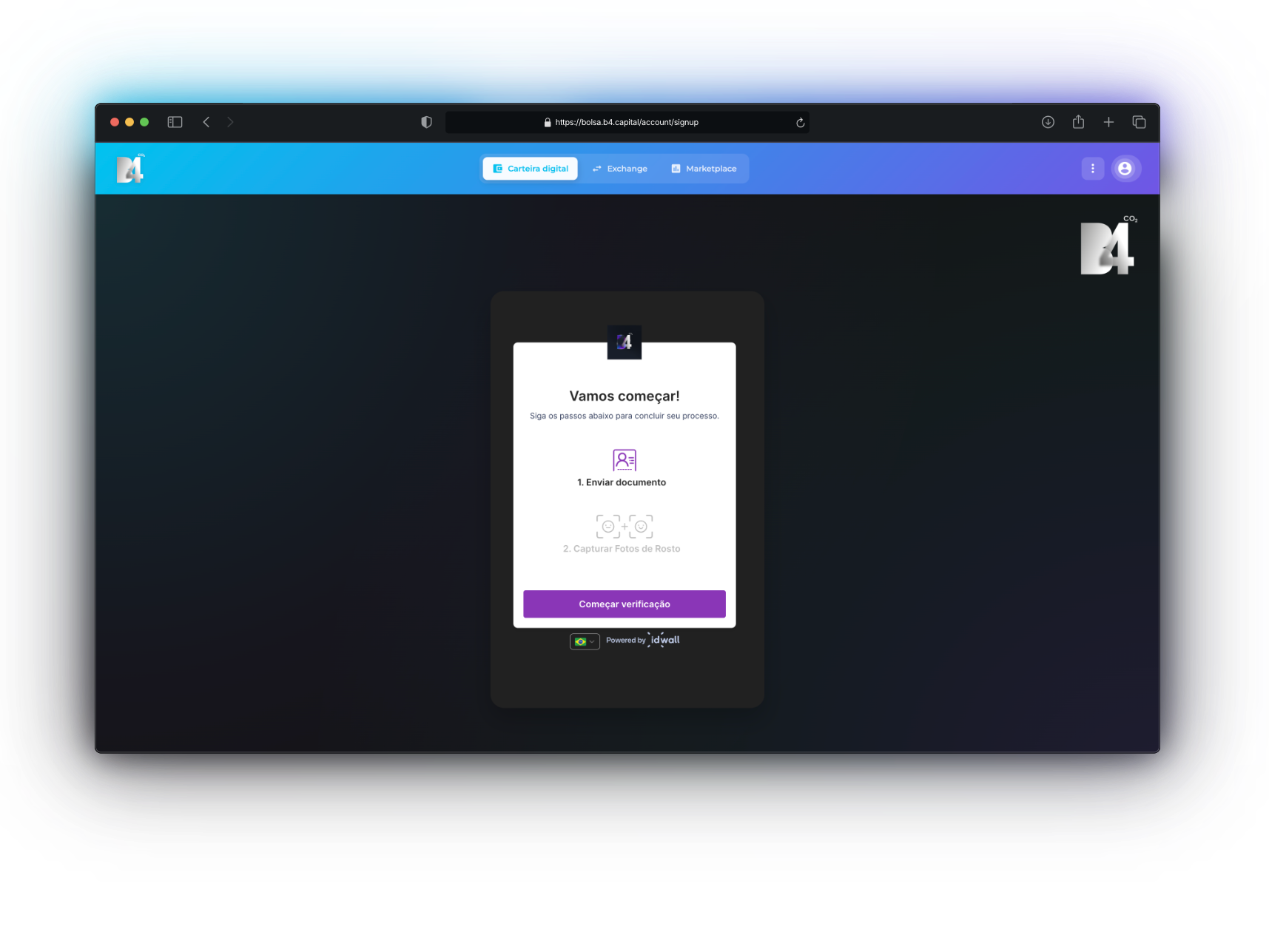
📋 STEP 5: Identity Verification (KYC)
- Upload an identity document: ID card, driver’s license, or passport (clear photo)
- Proof of address: Utility bill (electricity, water, or phone) issued within the last 3 months
- For companies: Articles of incorporation, company registration (CNPJ), power of attorney (if applicable)
- Wait for approval: The process takes 24 to 72 business hours
💰 STEP 6: How to Deposit Funds
Option A: PIX (Fastest)
- Access your B4 account
- Go to “Wallet” or “Deposit”
- Select “PIX”, “SWIFT” “USDT” and others.
- Copy the PIX key or scan the QR Code
- Complete the PIX transfer through your bank
- Wait for confirmation: Usually instant
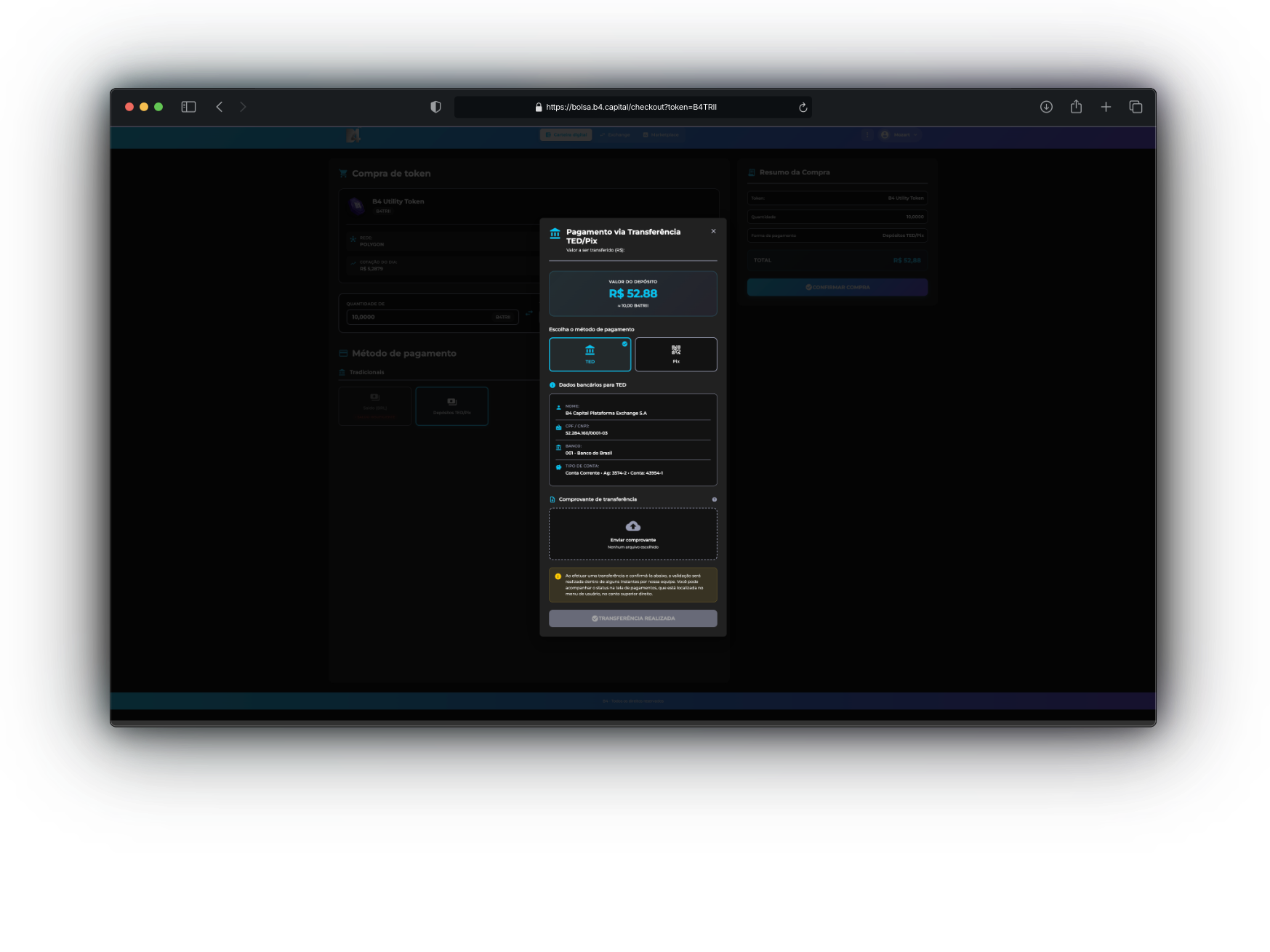
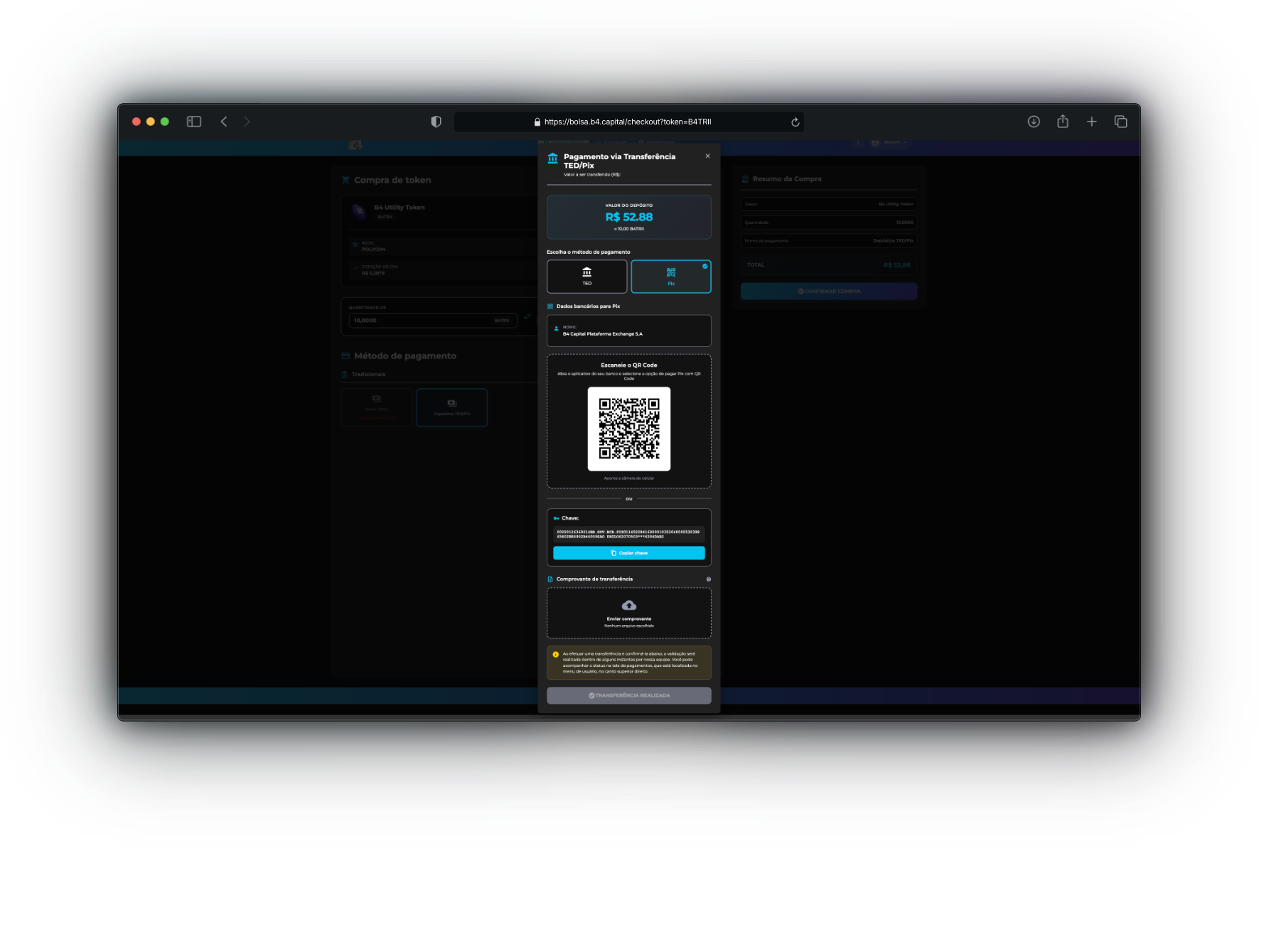
Option B: Bank Transfer SWIFT
- Request B4’s bank details on the platform
- Make a SWIFT transfer to the provided account
- Include your User ID in the notes/description field
- Wait for settlement: 1 to 2 business days
🌱 STEP 7: How to Buy Carbon Credits
7.1 Run a Carbon Footprint Assessment (Recommended)
- Access: https://agentedoclima.com
- Fill in details about your company or activity
- Receive your report within 24 hours with your carbon footprint
- Know exactly how many credits you need
7.2 Browse Available Credits
- Go to “Market” on the B4 platform
- Filter by category:
- 🌳 Carbon Credits (reforestation, conservation)
- 🌿 Biodiversity Credits (ecosystem protection)
- ⚡ Clean Energy Credits (solar, wind)
- 🚜 Agribusiness Credits (sustainable agriculture)
- ♻️ Recycling Credits (circular economy)
- 🚛 Green Logistics Credits (sustainable transportation)
7.3 Analyze the Project
- Review the project details (location, methodology, benefits)
- Check certifications and audit reports
- Verify the price per ton of CO₂
- Evaluate co-benefits (social and environmental)
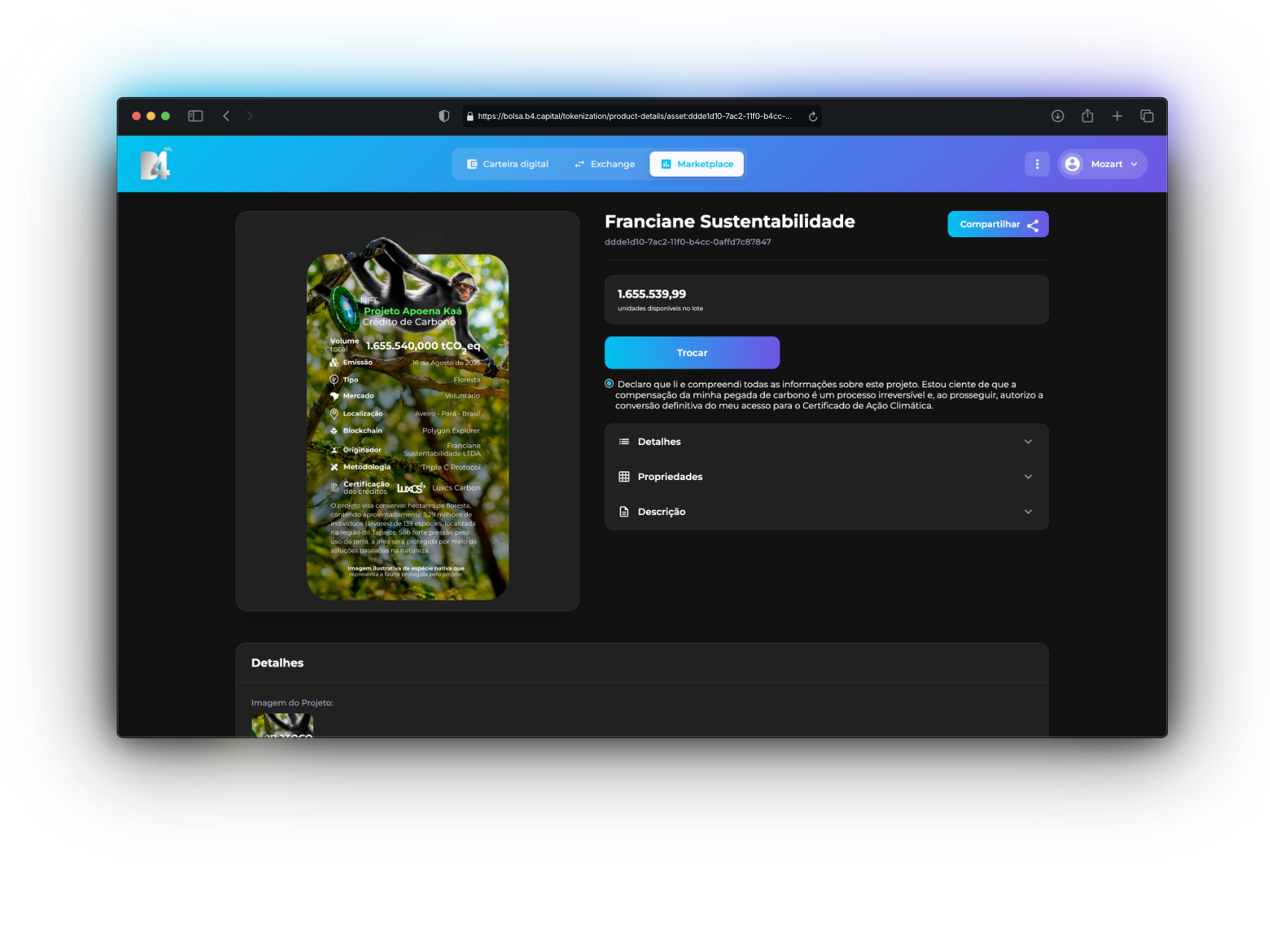
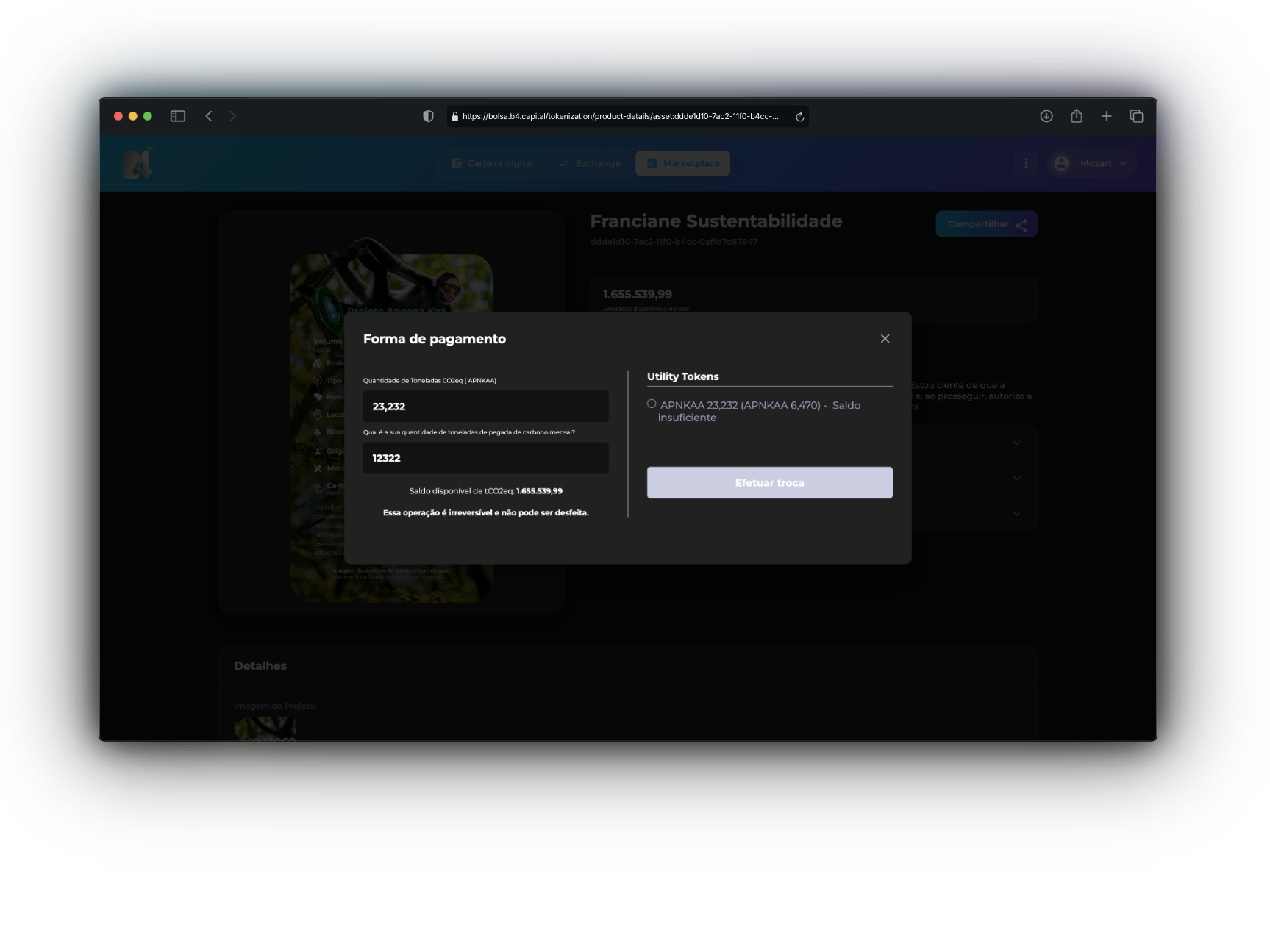
7.4 Complete the Purchase
- Select the desired number of credits
- Confirm the total amount (credits + fees)
- Choose the payment method:
- B4 account balance
- B4TRII Utility Token
- Direct PIX (if available)
- Confirm the transaction
- Receive the confirmation receipt by email
📊 STEP 8: Track Your Credits
8.1 Climate Action Clock
- Access the dashboard in your B4 account
- Monitor in real time:
- Credits acquired
- Carbon footprint compensated
- Environmental impact generated
- Projects supported
8.2 Certificates and Reports
- Download compensation certificates
- Generate reports for stakeholders
- Share results on social media
- Use for corporate ESG reports
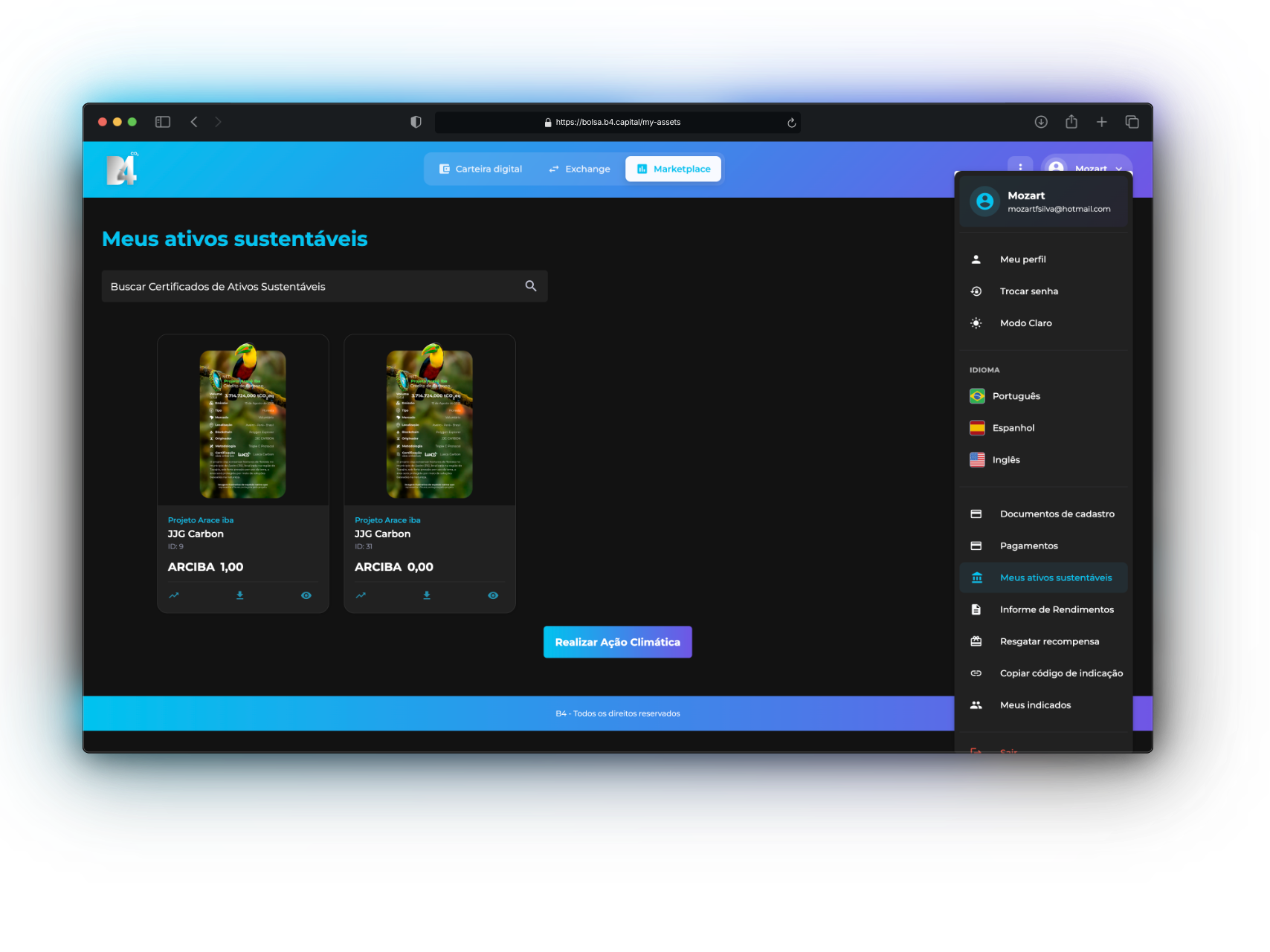
🔗 STEP 9: Blockchain Integration
- Full traceability: Each credit has a unique ID on the blockchain
- Transparency: Complete transaction history
- Retirement proof: Guarantee that the credit was used for offsetting
- Audit: Immutable data for external verification
💡 IMPORTANT TIPS
For Companies:
- Organize by department: Allocate credits to logistics, energy, operations
- Budget planning: Credits range from R$ 34 to R$ 281 per ton
- Integrate with ESG: Use B4 reports in sustainability documents
For Individuals:
- Start small: 1–2 tons to test the platform
- Choose local projects: Support Brazilian initiatives
- Track impact: Use the Climate Action Clock
Costs and Fees:
- Transaction fee: Check on the platform (varies by credit type)
- PIX deposit: Usually free
- TED: According to your bank’s fees
- B4TRII Utility Token: R$ 5.47 (updated daily via PTAX)
📞 SUPPORT & CONTACT
- Email: contato@b4.capital
- Website: b4.capital
- News portal: portalb4.capital
- Climate Agent: https://agentedoclima.com
- Service hours: Monday to Friday, 9 AM – 6 PM
⚡ QUICK SUMMARY – 5 MINUTES
- Go to b4.capital → “Create Account”
- Fill in personal information and documents
- Deposit via PIX or TED or SWIFT or USDT
- Run a diagnostic at agentedoclima.com
- Purchase credits in your desired category
- Track progress via the Climate Action Clock
Done! You’re offsetting your carbon footprint with full transparency and real impact through Brazil’s first Climate Action Exchange! 🌱
Start your Climate Action Project on B4 today:
About B4 — The First Climate Action Exchange
- Official Website: https://b4.capital/pt/
- Instagram: https://www.instagram.com/b4.capital/
- LinkedIn: https://www.linkedin.com/company/empresa-b4-capital/
- Email: contato@b4.capital
About Climate Agent
The Climate Agent is B4’s AI that performs carbon footprint diagnostics based on the GHG Protocol, delivering results in under 24 hours.
Access now: https://agentedoclima.com

0 comentários